Author: Santiago

  • How to Make the Perfect French Press Coffee

    How to Make the Perfect French Press Coffee

    After Plenty of Trial and Error…

    I’ll be honest: I used to think making French press coffee would be a breeze.
    Grind some beans, pour some water, and boom, coffee, right?
    Oh man, was I in for a surprise.

    My early attempts were all over the place. Sometimes it was too weak, other times way too bitter. I’d end up with gritty sludge at the bottom or coffee that tasted like dishwater. If you’ve been there, you know the pain. Turns out, getting it right actually takes some care.


    First thing’s first, you need the Right Equipment. This is where I messed up for way too long for way too long. Having a quality French press makes a HUGE difference.

    This is the one that changed EVERYTHING.

    After struggling with cheap presses, switching to this MuellerLiving 20oz Stainless Steel French Press fixed most of my problems instantly.

    It’s double-walled stainless steel, so it actually keeps the coffee hot while it brews. The 4-level filter system (no joke) finally got rid of the gritty sludge I kept getting at the bottom of my cup. Pressing is smooth, not stiff or awkward, and it just feels solid.

    It makes up to four 5-oz cups, travels well, works for coffee or tea, and it’s dishwasher safe, which I appreciate way more than I thought I would.

    If you want cleaner, hotter French press coffee without overthinking it, this is the one.

    How to Make the Perfect French Press Coffee

    1. Grind Your Beans Coarse

    French press hates fine coffee grounds. Go Coarse, chunky, and uneven, like sea salt. Anything finer and you’ll end up with sludge at the bottom of your cup.


    2. Heat Your Water

    You want hot water, not boiling. Around 200°F is perfect. Let boiling water sit for about 30 seconds so it doesn’t scorch the coffee.


    3. Add the Coffee & Water

    Add your coarse coffee to the press first, then pour in the hot water. I stick to about a 1:15 coffee-to-water ratio, it’s strong without being overpowering. Give it a gentle stir so everything gets evenly soaked.


    4. Let It Steep

    Put the lid on and let the coffee sit for about 4 minutes. This is where the flavor develops, so don’t rush it. Four minutes hits the sweet spot.


    5. Press Slowly

    Press the plunger down slowly and evenly. If it feels stuck, don’t force it, slow and steady keeps the coffee smooth and clean.


    6. Pour Immediately

    Once you’re done pressing, pour the coffee right away. Letting it sit with the grounds keeps extracting and can throw off the flavor.


    That’s it. After plenty of trial and error, this is the process that finally gave me a consistently great cup of French press coffee. Once you get the grind right, control the water, and use a solid press, it stops being frustrating and just works.

    If you want to make it easy on yourself, start with the same French press I use here:

  • How to Moka Pot Coffee (The Right Way, After Plenty of Trial and Error)

    How to Moka Pot Coffee (The Right Way, After Plenty of Trial and Error)

    Moka pot coffee wasn’t something I picked up and nailed right away.

    At first, it felt unpredictable. Some mornings it was drinkable, other mornings it was sharp and bitter for no obvious reason. I kept tweaking little things, thinking it was just a matter of preference, but nothing felt consistent.

    Eventually, I realized the problem wasn’t the moka pot itself — it was the small details I kept brushing off.


    Where I Kept Going Wrong

    Once I paid attention, the pattern was pretty obvious. Whenever the coffee tasted off, it usually came down to one of these:

    • Grinding the coffee too fine
    • Pressing or packing the grounds into the basket
    • Starting with cold water
    • Using high heat to “speed things up”
    • Letting it sit on the stove after it finished brewing

    None of these seem like a big deal on their own, but together they make moka pot coffee taste harsh and burnt.


    Using the Right Moka Pot Matters

    This took me longer to realize than it should have.

    I started out with a cheap moka pot and didn’t think much of it. Thin metal, uneven heating, weak seals — all things I ignored. Once I switched to a better-built moka pot, the process instantly became more predictable and the coffee tasted cleaner.

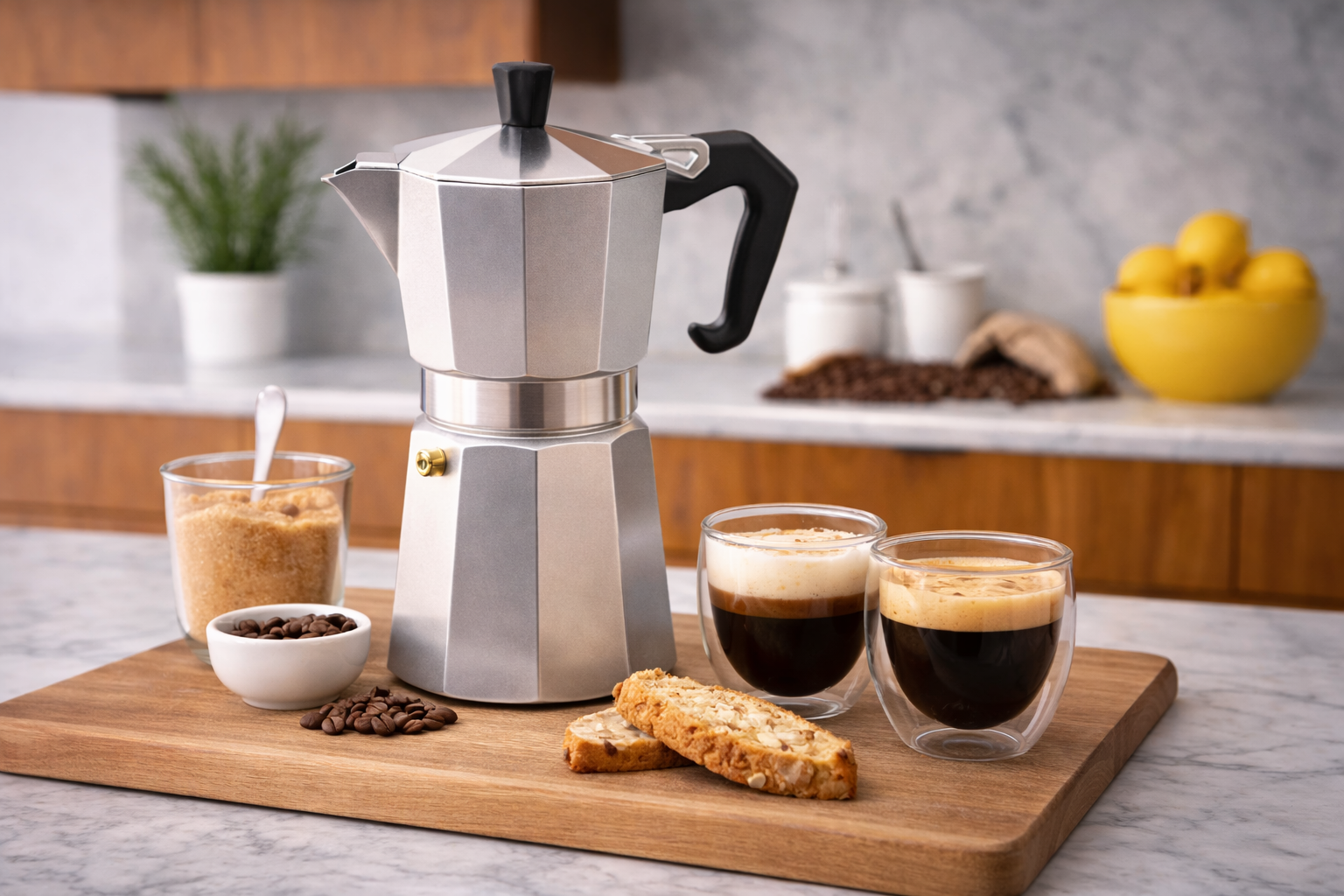
    This is the Moka Pot I use and recommend:

    From there, everything else fell into place.


    How to Moka Pot Coffee

    1. Grind the Coffee Right

    Use a medium-fine grind. Too fine turns bitter. Too coarse tastes weak. This step matters more than most people realize.


    2. Fill with Hot Water

    Fill the bottom chamber with hot water, stopping just below the safety valve. Starting hot keeps the coffee from overcooking on the stove.


    3. Insert the Filter Basket

    Place the empty filter basket into the bottom chamber so it sits securely above the water.


    4. Add Coffee (Don’t Pack It)

    Fill the basket and level it gently. No tamping. Packing the grounds restricts flow and ruins the extraction.


    5. Brew on Low Heat

    Low to medium heat is the move here. High heat rushes the brew and pulls out harsh flavors.


    6. Remove When It Gurgles

    Once the coffee finishes flowing and starts to sputter, take it off the heat right away.


    7. Stir and Pour

    Give it a quick stir in the top chamber, then pour and enjoy.


    Final Thoughts

    Moka pot coffee finally made sense once I stopped rushing it and paid attention to the basics. It doesn’t need tricks — it just needs a little patience and the right setup.

    If you want to skip the trial and error, starting with a solid moka pot helps a lot:

    Strong, rich, and worth the effort.

  • Beat Eye Strain: How I Tackled Computer Vision Syndrome (And Found Real Relief)

    Beat Eye Strain: How I Tackled Computer Vision Syndrome (And Found Real Relief)

    Disclaimer: This article is for informational purposes only and is based on general wellness practices and personal experience. It is not intended to diagnose, treat, cure, or prevent any condition. Always consult with a healthcare professional if you have concerns about your eye health.

    The Struggle Was Real

    If you’re spending hours glued to a screen — whether it’s for work, gaming, or doom-scrolling TikTok — you probably know the feeling: dry, burning eyes. Headaches that seem to crawl in from nowhere. That weird tension in your neck that just won’t quit.

    Yeah… I’ve been there too.

    A few months ago, my screen time was off the charts. Between long workdays and late-night gaming, my eyes were constantly tired. I’d wake up groggy, stare at my monitor all day, and end the night rubbing my temples like a cartoon villain.

    It wasn’t just annoying — it started affecting how I worked, slept, and even relaxed.

    I knew something had to change.


    What Is Computer Vision Syndrome (CVS)?

    Computer Vision Syndrome is exactly what it sounds like: a cluster of symptoms caused by too much screen exposure, like:

    • Dry or irritated eyes
    • Blurry vision
    • Headaches
    • Neck and shoulder pain

    Sound familiar? If you’ve been blaming stress or lack of sleep, your screen might be the hidden culprit. screen might be the real culprit.

    Why It Happens

    Here’s what usually causes CVS:

    • Too much screen time → nonstop eye strain
    • Poor posture → neck, shoulder, and back pain
    • Harsh lighting or glare → squinting and extra strain
    • Blue light exposure → disrupted sleep and tension
    • Reduced blinking → dry, itchy eyes

    The good news? Once I figured this out, I could finally fight back.

    3 Game-Changing Tools That Helped Me Beat Eye Strain

    I didn’t solve it overnight, but these three tools made a huge difference — and I still use them every single day.

    1. Blue Light Glasses That Actually Work

    I tried cheap blue light blockers before — they either looked goofy or didn’t help. Then I invested in quality blue light glasses, and it was a total game-changer.

    Why I recommend them:

    • No weird yellow tint — everything looks natural
    • Noticeably less eye tension by evening
    • Fewer headaches (this was huge for me)

    I wear them during all screen time now, especially in the evening. If your eyes feel fried after a long day, these are one of the simplest fixes.


    2.A Daily Supplement That Supports Vision from Within

    Screens aren’t going away, so I wanted to protect my vision from the inside too. That’s when I tried a trusted eye vitamin formula — and honestly, it was worth it.

    Why I keep taking it:

    • Lutein + zeaxanthin = support against digital eye strain
    • Bilberry extract = less dryness and irritation
    • My eyes feel less “heavy” after long workdays

    Of course, this is just what worked for me — check with your doctor before starting supplements.


    3. The Eye Massager That Changed My Nights

    This one surprised me the most. A friend recommended an eye massager, and now it’s part of my nightly routine.

    What it does:

    • Gentle heat + cooling → melts away eye tension
    • Light compression → feels like a spa for your eyes
    • Helps me wind down → I actually sleep better

    Just 15 minutes before bed and I wake up feeling more refreshed. If you deal with dry, tired eyes, this is the quickest relief I’ve found.


    Bonus: 4 Tiny Habits That Help Big

    Pairing these habits with the tools above amplified my results:

    • 20-20-20 Rule — every 20 mins, look 20 feet away for 20 seconds
    • Screen height — keep the top of your screen at or below eye level
    • Micro-breaks — even 3 minutes per hour helps
    • Match screen brightness — no extreme contrasts with room light

    Final Thoughts: Small Tweaks, Big Results

    Taking care of your eyes doesn’t have to be complicated. With a few smart tools and habits, you can massively reduce screen-related eye strain — and start feeling better fast.

    Here’s what’s working for me every single day:
    ✅ Blue light glasses I actually want to wear
    ✅ Eye vitamins that keep my eyes from feeling drained
    ✅ A relaxing eye massager that ends my day right

    If your screen time is climbing and your comfort’s crashing, try making one change today. Your eyes will thank you.

  • The Best ASMR Microphones in 2025

    The Best ASMR Microphones in 2025

    Ever wonder why some ASMR videos instantly relax you while others just… don’t hit right? The difference is usually the mic. A high-quality microphone doesn’t just record — it creates that crisp, immersive experience your listeners crave. If your mic isn’t up to par, your content (and channel growth) could be suffering.

    Here’s what a great ASMR mic will do for you:

    • Capture every whisper, tap, and trigger in stunning detail
    • Eliminate background noise that ruins the vibe
    • Make your content sound professional — even at home
    • Keep viewers listening longer (and coming back for more)
    • Help your channel grow faster with better audio quality

    The good news? You don’t need to spend a fortune or know audio tech. I’ve rounded up the best ASMR mics that are beginner-friendly, fan-approved, and totally worth it.

    Let’s dive into the top picks and find the one that fits your style.

    And if you’re wondering about mic placement — don’t worry. At the end of this guide, I’ve included a top-rated mic arm that works perfectly with any of these mics

    The Best Microphones for ASMR

    1. Best USB ASMR Microphone: FIFINE ASMR USB Microphone

    The FIFINE ASMR USB Microphone is perfect for creators seeking high-quality, user-friendly audio. Whether capturing whispers or gentle triggers, it delivers crystal-clear sound with seamless control.

    Key Features:

    • Gradient RGB Lighting: 7 color modes to enhance your setup.
    • Clear Sound: Cardioid condenser mic minimizes background noise for detailed ASMR.
    • Quick Mute & Gain Control: Instant mute and sensitivity adjustment.
    • Easy Setup: Plug-and-play for effortless use.
    • Included Accessories: Shock mount, pop filter, and tripod for stability.

    Ideal for ASMR artists wanting pro-level sound with simplicity.

    2.SteelSeries Alias USB Microphone – Crystal-Clear Audio for ASMR Recording

    Experience immersive ASMR with the SteelSeries Alias — a premium USB mic built for creators who take sound seriously. While it’s on the higher end of the budget, the audio quality and pro features make it a solid investment if you’re ready to level up your ASMR game.

    Key Features:

    • 3x Bigger Capsule: Captures a full range of soft ASMR triggers with stunning detail and depth.
    • AI Noise Cancellation: Blocks out background noise so your whispers stay pure and uninterrupted.
    • LED Monitoring: Easily check your audio levels with green-to-red lighting — perfect for live sessions.
    • Customizable RGB Downlight: Adds a calming glow to your setup and enhances the vibe.
    • Shock-Mount Stability: Built-in mount reduces vibrations and desk noise for cleaner, clearer audio.

    Best for creators who want studio-level clarity and are ready to invest in top-tier gear.

    3. Best XLR ASMR Microphone: FIFINE XLR Dynamic Microphone

    The FIFINE USB/XLR Dynamic Microphone is a top choice for ASMR creators seeking premium sound and flexibility. It supports both XLR and USB, making it ideal for any setup, from casual to professional use.

    Key Features:

    • Natural Audio Clarity: Crisp, balanced sound (50Hz-16KHz) for capturing every ASMR detail.
    • Dual Connectivity: XLR and USB for seamless home or studio recording.
    • RGB Lighting: Customizable with 10+ colors to set the perfect ASMR mood.
    • Mute Button: Quick mute with LED indicator (USB mode) for silent moments.
    • Audio Control: Built-in headphone jack and adjustable mic gain for precise tuning.

    Ideal for those looking to enhance their ASMR recordings, from soft whispers to tapping sounds., or immersive ASMR experiences.ing, or podcasting.

    Bonus: FIFINE Microphone Boom Arm – The Perfect Companion for Your Mic

    Complete your setup with the FIFINE Microphone Boom Arm, a sturdy, low-profile stand designed for stability, flexibility, and a clutter-free workspace.

    Key Features:

    • Sturdy Metal Build: Ensures durability and stability.
    • Low Profile Design: Keeps your desk clear while allowing full adjustability.
    • Cable Management: Keeps wires organized for a clean setup.
    • Fully Adjustable: Extends 29 inches, rotates 360° for perfect positioning.
    • Universal Fit: Includes multiple screw adapters for most mics.

    The perfect addition to enhance your ASMR or streaming setup.


    To sum up, the FIFINE USB/XLR Dynamic Microphone and FIFINE ASMR USB Microphone are top choices for capturing soft, detailed ASMR sounds with clarity. Pair them with the FIFINE Microphone Boom Arm for a stable, clutter-free setup and optimal mic positioning.

    Whichever you choose, you’ll be ready to create immersive, high-quality ASMR content effortlessly.